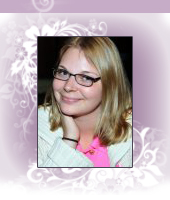
My Story by Victoria Frank My Story by Victoria Frank
Along the path to diagnosis
A Journal By Victoria Frank
Where do I begin?
Well, I have undergone numerous tests for the past 18 months due to low platelet counts, [low] red blood cell levels and [low, nearly non-existent] white blood cell levels. Specialists at Bellin Cancer Treatment Center & Froedtert Cancer Treatment Center have made a diagnosis of Aplastic Anemia, and the treatment plan includes a bone marrow transplant. God has blessed me with two bone marrow matches, my brother, Nicholas, and my sister, Melissa.
God Bless! Please read the background story to fully understand this all!
Background Story
It all began when I was about three months pregnant for my second child, Hunter. A complete blood count test (CBC) came back abnormal, and an accidentally-run B-12 test revealed low B-12 levels. At that time, I wasn't in the danger zone, but there was cause for my doctor to monitor me closely. I was due December 25, 2008.
Second Trimester
As my due date came closer, my blood levels (red, white and platelet counts) fell to a dangerous level. We were sent to see a hematologist and a high risk pregnancy doctor.
Third Trimester
My blood levels were so low that the hematologist put me on a steroid to help bring the levels up. This did not work, and sent Hunter into distress.
On December 2nd at 10 AM, just 23 days from my due date, the high-risk OBGYN was unable to detect kicking or any movement. A stress test and full profile were immediately conducted. There were no signs of movement or kicking.
Early Delivery
We were sent up to the birth center to have our little boy! I went through two transfusions of red blood cells & platelets before he was even born. (I also could not take any medication what so ever because it would affect my platelet count, so this would be all natural!!! The doctors were able to get my red blood cell counts and platelet counts up to a comfortable level to induce me and start labor!
December 3, 2008 - Baby Hunter Born
On December 3, 2008 in the very early morning, Hunter was born. Thank God! He was small, but healthy!
Red, White & Platelet Counts Continue To Decline
Before we left the hospital on December 5th I was given one more transfusion. I was given 2 more transfusions to get my levels up after he was born! The transfusions did not take, and my levels kept falling (basically, my bone marrow was failing to produce enough cells to keep up with the natural death of cells in my body, and my immune system was attacking my blood).
My hematologist doctor kept checking me and everything was looking good! My levels had fallen some, but my hematologist was not concerned; he felt that my body would correct itself. But something told me to check, and double check.
So, I took it upon my self to call Bellin Cancer Team and set up an appointment! Thank God I did! I love my doctor so much, she is the best!!!! She, too, thought everything was looking good, but then my levels fell on my 2nd appointment with her! So the testing started. Nothing found! More testing. Nothing found! Finally we went in for a bone marrow biopsy on September 9 2009. The hematologist expected to find Leukemia, MDS (pre-Leukemia) or maybe Aplastic Anemia.
God Bless! Victoria
Preliminary diagnosis
On September 10, 2009, two pieces of vital information learned from the bone marrow biopsy were revealed. 1st - it wasn't Leukemia! Amen! 2nd - the bone marrow at the place where they conducted the biopsy was showing 1% cellularity, which means, in short, that my bone marrow was only producing 1% of the blood cells that my body required. Normally, the bone marrow of a person at 22 years of age would show an 80% cellularity.
Referred to Bone Marrow Transplant Specialist
I was referred to a bone marrow transplant specialist at Froedtert for further evaluation, and informed that I would likely need a bone marrow transplant. My doctor is Dr. Jean Palmer.
Diagnosis
After nearly 50 more tests, and a second bone marrow biopsy in which the doctor was able to aspirate a quantity of bone marrow, and subsequent consultations with six other specialists in the field, I was diagnosed with Aplastic Anemia on October 13, 2009.
Aplastic Anemia is the failure of the bone marrow to produce blood cells. The production failure is caused by the destruction of blood stem cells in the bone marrow. It has long been thought that the destruction of blood stem cells is due to an attack of the immune system upon one's one bone marrow. As the blood stem cells diminish, less blood cells are able to be produced. Blood cells go through a natural life cycle; red blood cells remain in the body for about 90-120 days, while white blood cells remain for only 72 hours. The bone marrow typically produces new blood cells to replenish the body just in time as the old cells' lives end. However, in aplastic bone marrow, the bone marrow dies off [and looks like fat deposits], and the blood stem cells are unable to produce new blood cells. Consequently, a deficiency of blood cells occurs. Because new cells are not being created, the deficiency becomes more critical.
Twenty years ago, aplastic anemia was unable to be corrected; today however there are two primary forms of treatments. A bone marrow transplant, with its associated chemotherapy to eliminate remaining bone marrow prior to transplant of blood stem cells from the donor. A bone marrow transplant can for all purposes cure aplastic anemia.
See Understanding Aplastic Anemia
God Bless! Victoria
about victoria
It's November 1, 2009. I turned 23 years old today. I am "mom" to two beautiful children: Max (2 years old), and Hunter (10 months old), who are the apples of my eyes and the gems of my heart. I live in Neenah, Wisconsin. For many years since my childhood, I have been a strong supporter of raising funds for Multiple Sclerosis, Leukemia, Alzheimer's and child birth defects.
I will undergo treatment at Froedtert Hospital in the Bone Marrow Transplant wing, and be monitored for approximately 12-18 months before being able to return to work.
Treatment Plan
My doctor, Dr. Jean Palmer's treatment plan for me is a bone marrow transplant (BMT) preceeded and subsequently (hopefully, temporarily) treated by immunosuppression. I have Very Severe Aplastic Anemia (VSAA) and I have no choice but to go the route of a BMT to survive.
bone marrow matches
I have two siblings, both of whom are matches! That is a miracle! My brother, Nick, insists on being my donor. Melissa will be ready if needed.
When you come to the edge of all the light you have known and are about to step into the darkness, Faith is knowing one of two things will happen... there will be something upon which your feet will stand or you will be taught how to fly. Celebrate Life.
Miracles Abound
Aplastic Anemia Instead of Alternatives
My first miracle was my diagnosis. From all accounts, the medical experts expected to find Leukemia, Lymphoma, Myelodisplasic Anemia or PNH - all forms of cancer - when they performed the first of several bone marrow biopsies during my diagnostic tests, but they didn't. In fact, there were no signs of any leukemia cells to their and our surprise and relief.
As my doctor stated, "If one were forced to chose their blood disease, Aplastic Anemia would be it, because it can be cured with a bone marrow transplant."
Both Siblings Bone Marrow Donors
The second miracle came after the diagnosis during the HLA testing. I was blessed with matching both of my siblings.
A lifetime thank you to my brother and sister for their selfless immediate offers to be my donor. Thank you to my brother for saving my life. Our prayers were answered.
Donor Exams
Once my donor was identified, both the patient (me) and the donor (my brother, Nick) underwent extensive exams to ensure that our organs were healthy, immune systems in tact, and that they had no other medical conditions that would prevent a successful transplant.
My brother passed his physical with flying colors. Every organ, bone-density, and his respiratory system were checked and double-checked.
I passed my physical, but for the Aplastic Anemia. My bone density test revealed a slight issue with the integrity of my bones, which wasn't a problem that would stop us from moving forward towards the transplant, but it would become a problem later on in my treatment and recovery.
Chemotherapy Scheduled
As soon as the donor was matched, I was scheduled for a bone marrow transplant. I was hospitalized 6 days prior to the transplant. During those days, I underwent intensive chemotherapy and ATG treatment to completely destroy her immune system and all remaining blood cells and bone marrow, and prevent and treat acute rejection. My regime had initially included cyclosporine, but because of the problems with it being taken off of the market, we had great concerns.
Cyclosporine is an immunosuppressant. It can prevent organ rejection after transplant in its oral form. It can also treat rheumatoid arthritis and psoriasis. In eye drop form it can treat chronic dry eye. It is sold under the brand names, "Neoral, Sandimmune, Restasis, and Gengraf". Cyclosporine was taken off of the market in the United States and then worldwide due to the incidences of mortality resulting from the drug (FDA notice). It was later determined that the mortalities were due to incorrect mixing of the powdered drug as a result of improper labeling. The United States FDA has allowed the drug to be sold in the US; however, other countries have not yet allowed it to be reintroduced to their markets even with the labeling changes.
While full-body radiation (total body irradiation) is typical in the treatment regime for Aplastic Anemia, it is not required when the donor is biologically related to the recipient. Radiation is used when the donor and recipient are unrelated, or the patient has cancer; Aplastic Anemia is not cancer.
The sixth day is called the 'day of rest'. Nothing is done on this day. No chemo, no ATG, etc.
bone marrow Aspiration and Transplant
On the 7th day, let there be life!
On the seventh day, my donor (my brother), went into surgery, was placed under full anesthesia, and received approximately 25 needle-sized extraction holes in each hip through which his marrow was aspirated into a bag.
Words can't express my thanks! From the deepest love of my heart, thank you, Nick!!
The bone marrow was then filtered to remove bone fragments, and spun down to remove all cells but the blood stem cells. The blood stem cells were then put into a plastic bag with an IV line on it, brought to my room, and hung just like an IV. Physically, getting the blood stem cells was just like getting a blood transfusions, but the emotions that come with a blood stem cell infusion are over the top wonderful. You might call these 'fresh blood stem cells', so fresh they were warm. All in all, it was rather uneventful, just like my doctor said it would be, except for the emotions of hope and wonder.
We were physically located in the same area, so the blood stem cells were not frozen. When the donor and the recipient are a distance apart, the donor donates his or her blood stem cells and then they are frozen to be transported to the location of the recipient. They are kept frozen until the recipient is ready for them. When the recipient is ready, the BSC's are thawed (it doesn't smell very good when they are thawed), and fed into the recipient just like a blood transfusion.
As a side note, I saw many people in the bone marrow transplant unit who were there for BMT's of their own cells to treat cancer. In those situations, their cells were frozen until they were ready for them.
blood stem cell growth
The transplanted blood stem cells were injected into my bloodstream, and the 3-4 week much anticipated wait began for them to make their way to my bone marrow, seat themselves and begin producing sufficient and continuous quantities of blood cells to sustain my life. I couldn't wait for that to happen, because it would mean I wouldn't be dependant upon blood transfusions to survive, and it would mean I would survive. The feelings that come with that thought are feelings of hope. I was filled with hope and joy.
Unfortunately, my platelets weren't coming in fast enough, so I had to have infusions of platelets.
Unfortunately, I became platelet-refractory, which meant that I needed platelets that were HLA matched to mine, but that were not my donors. My doctor contacted the blood center for those urgently needed platelets. In some situations, they cannot be found; in my situation, it took some work on behalf of the amazing and wonderful techs at the blood center (THANK YOU!!), but they found a match for me. Now you aren't going to believe how generous this person was to me. That person got out of bed, and went to the blood center, and donated platelets for me at 4 AM. I received them as soon as they were ready. That happened three times to save my life.
During the platelet refractory period (I think it was 10 days), I was pretty much out of it. I had pains in my gut, so I twice underwent CT's to ensure that I didn't have internal bleeds. I was in a great deal of pain from the chemo, my mouth sores and almost constant emesis for a while.
On December 16, 2009, 16 days post-transplant, my white blood cell count rose from zero to 200. This is a huge milestone! This means that the blood stem cells that were infused into me from my brother are seating themselves in my marrow (huge miracle!) and producing blood cells (huge, huge, huge miracle!) It is rather miraculous, all of this, and how the blood stem cells just know where to go (into my marrow), and then they just go on with their jobs... producing cells.
White cells are the first cells to come back, then the red cells, then the platelets. My counts were low, and I had to have a few red blood cell transfusions.
I was hospitalized for 32 days. I was released on December 26, 2009. From the hospital, I moved into an apartment on the hospital campus where I'd live with my caregiver for 100 days before going home. I was missing my babies so much, and all I wanted to do was to see them.
I thank my Mom for all she has done for me. She was with me every day at the hospital, she worked when I slept, and she never ever gave up or left me. She was also my caregiver, and I don't know how I would have made it without her.
Finally, after a month in the apartment, my counts were elevated enough (and my ANC was high enough) that I could see my babies. It was the best day! I held them and cried inside with joy.
I was released on February 24th to go home. That was early, my original date was April 5, 2010. I can remember how thrilling that news was to me. I so wanted to be with my babies.
Mom's Update
On day +68, she developed Graph-versus-Host Disease (GVHD) for which she began Photopheresis Treatment on March 2, 2010.
On day +93, she was diagnosed with having the Respiratory Synctial Virus (RSV), and was readmitted to the hospital on March 3, 2010 for treatment. RSV is often linked to Broncholitis Obliterans Syndrome, which she developed and later received a diagnosis for it.
The summer of 2012 was her summer. She was weaned off of the prednisone and the immunosuppressants. She had a grand 4th of July celebration with her family in her hometown... that to her was as good as she ever hoped life to get... family meant everything to her.
We didn't know that 2012 would be her only summer of freedom.
Victoria passed away in March 2014. She leaves behind a family that misses her every day, and two little boys who not only miss her but who are trying to come to terms with not having her in their lives. She also leaves behind an amazing journey of strength, power from the Lord, faith, hope and persistence. She embodies evrything I ever want to be with my faith! Together with her sister, Melissa, they embody all I could ever hope.
God bless you, Victoria; God bless you always.
As Victoria always said, "Never lose your faith, because you never know when you are going to need it." I've seen many people lose their faith; I see how that works for them... it doesn't work well. Many people asked Victoria if she wanted to die when she was in the hospital. Many people ask me how I stood with her with such strength. All the answers to all the questions are the same: My Lord, My God, He has the steering wheel. God bless you always, my youngest, my fearless, my Victory Child. I love you to ends of time.
Adaption from Mark for Victoria:
We walk not by sight,
But by faith...
A walk that hasn't ended
But changed
A walk with complete healing
Not here but there
A walk with The Lord at home,
Not our home
Aas we wished,
But rather His home
As he commanded.
Welcome home, our beloved Victoria, welcome home.
We wish you well on your new journey that's only just begun, and hope it, too, shall bless you with many joys, much laughter and more wisdom for we know, in our hearts and in our minds, Love lives on forever and you take our love with you when you go.
I imagine your hand still in mine, for I shall never let go.
Onward with miracles...
Upward with praise. Amen.
Ithaca
Adaption of Ithaca by Cavafy for Victoria
When you set out on this journey,
I know you hoped for joy
and that the voyage would be a very long one,
that there would be many a summer morning
with what pleasure,
with what joy,
you'd come into many harbors
seen for the first time.
And now the journey is over,
Too short, alas, too short.
It was filled with adventure & wisdom,
laughter and love,
gallantry and grace.
And joy.
It was filled with love
For your children, and
The love of your children.
Your journey touched so many others on their journeys, often changing their courses for the better.
But now your journey here is over
and was far, far too short.
We bid you farewell with our pain.
Farewell our beloved, Victoria, farewell.
Ithaca was Jackie Kennedy Onassis' favorite poem. Ithaca was read for her at her burial.
|